
Flowcait
“Find and book your next class.” Flowcait gathers class listings from across the web into one place, then lets people search them the way they talk — answered by an AI agent that is cheap to run and grounded in real data.
- Pipeline
- Scrape → store → search
- Search modes
- Filters + free text
- AI
- Low-cost agent
- Answers
- From stored data
The challenge
Class schedules live everywhere — studio sites, booking pages, listings — each in its own format. Finding “something like this, at a time that works” means opening a dozen tabs. Plugging a large AI model straight into the problem would be slow, expensive and prone to inventing classes that do not exist.
How it works
- 1 · CollectScrapers
Gather class listings from public sources across the web.
- 2 · CleanNormalise
Different formats become one consistent class record.
- 3 · StoreDatabase
Listings are stored in one place, ready for fast lookups.
- 4 · AskAI agent
A small model turns free text into real queries over the stored data.
Why a low-cost agent beats a big model here
The expensive part of AI search is usually asking a large model to know the answer. Flowcait never does that. The agent’s job is narrower: understand what the person asked for, translate it into structured searches against the database, and explain the results. Because the facts come from stored listings, a small, cheap model performs well — and answers stay tied to classes that actually exist.
- Two ways to search: classic filters for people who know what they want, and free text for people who don’t.
- Grounded answers — results come from the database, not from the model’s memory.
- Cost that scales gently: a lightweight model per query instead of a frontier model for everything.
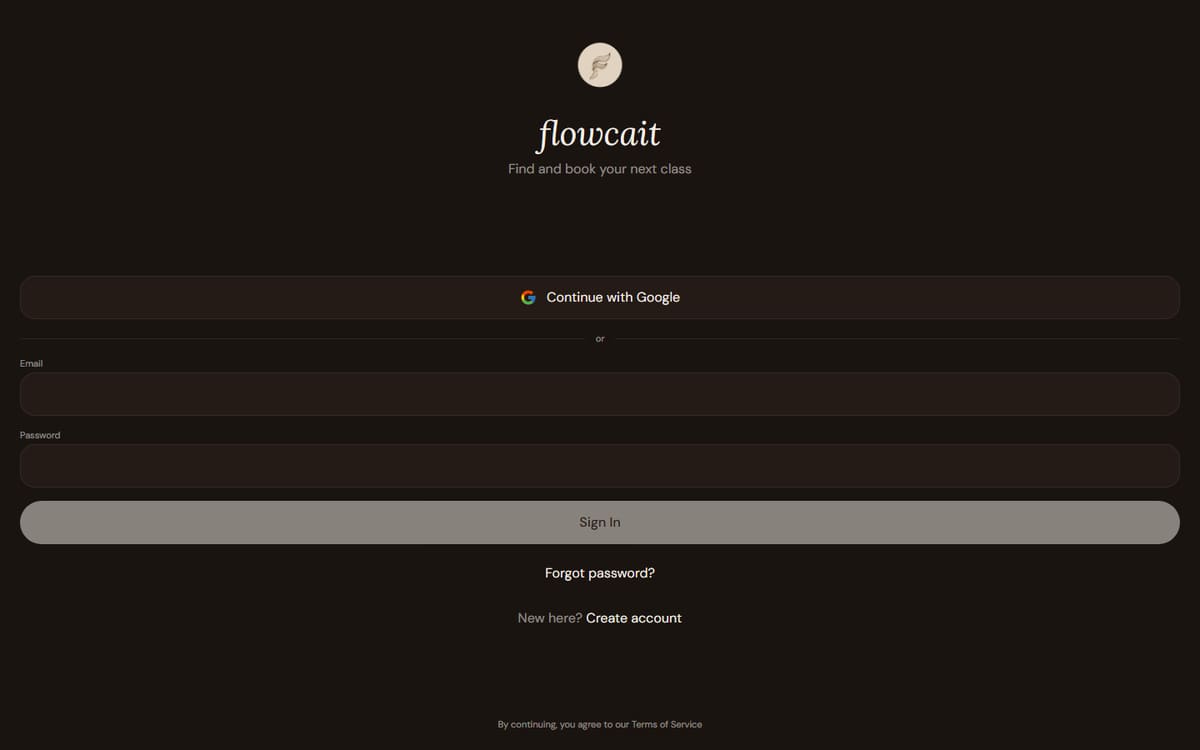
- Accounts with Google sign-in or email, so people can come back to what they found.
The outcome
A working product that turns scattered web data into a single searchable source, with AI search that is fast and affordable to run. The same pattern — collect, clean, store, then let an agent query it — is what we recommend to businesses that want “ChatGPT for our data” without the bill or the hallucinations.